Oxygen: A Wine's Friend Or Foe!

Thursday, February 17, 2011 by Ed Kraus
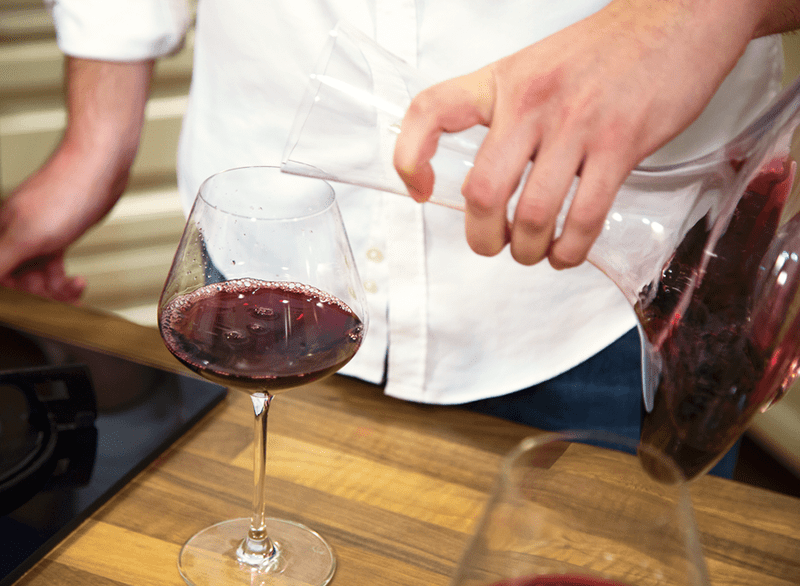
Splashing WineHello Kraus,

I just started to look into making wine. I read some articles on your website and others. One thing confusing me is it seems like air in the wine is good when it is being made but bad after it is made. How can it be both?

Thanking you in advance,
Greg 
----------
Hello Greg,

Oxygen plays a role in wine making in two different ways at two different stages. Early on it's what allows the wine yeast to grow successfully, insuring a vigorous fermentation. Later on, it's what allows the...Read More » »

What On Earth Is Bottle Shock?

Thursday, January 6, 2011 by Ed Kraus
Is This Bottle Shock?If you didn't already know what this blog was about, the term bottle shock might conger up some interesting visions. I personally think of someone getting hit over the head by a bottle while in some bar fight or even hitting yourself in the head like our friend here on the right, but, I digress...

What Is Bottle Shock?
Bottle shock is a term used to refer to a wine that is suffering from the symptoms of getting too much air in too little time. These wines tend to be flat in their overall...Read More » »

The Importance Of Aging Your Wines

Thursday, December 16, 2010 by Ed Kraus

Aging Homemade WineAlmost everyone understands that wines need to age, but very few people realize just how important aging actually is to a wine. Aging is a process that is most often either underestimated or completely ignored by the home winemaker.

In reality, I would venture to say that aging a wine is just as important as the quality of the grapes used to produce the wine. If you're missing either one, the wine will suffer noticeably.

Within the first 30 days of aging most people experience enough improvement...

Read More » »

Alternatives To The Cork And Corker...

Thursday, December 9, 2010 by Ed Kraus
Wine Bottle StoppersMany beginning winemakers will be happy to know that you do not have to buy a corker to bottle your wine. We have solutions for sealing wine bottles that can be done without a corker as well as with a corker.

When you go to buy corks for your wine bottles you will find that most wine cork stoppers require a corker to press the cork into the wine bottle. This is because a new cork starts out much fatter than what you are used to seeing coming out of the wine bottle.
 
These are the type of wine...Read More » »

Preparing A Wine For Longer Aging

Wednesday, September 1, 2010 by Ed Kraus

Aging WineDear Friends,

What do I have to do to age my wine longer than the time the instruction say. For example I drink some at the time it is ready by instruction and save some for tasting later and see if is getting any better by aging.

Thank You
Ricardo


----------

Dear Ricardo,

There are two basic things that you will need to do to get a wine ready for extended aging.

1) Add Sodium Metabisulfite To The Wine: This will help keep the wine from spoiling and also keep the wine's color fresh and...

Read More » »

How Much Air Should Be In My Wine Bottle?

Friday, July 23, 2010 by Ed Kraus
Air Space In Wine bottleGood Morning,

Thank you for the info in the newsletters they have been helpful. 

I need to know how much air should be above the wine in the bottle. Could you let me know about that so I don’t over/under fill.

Dr. Thomas


----------

Dear Dr. Thomas,

I'm very glad to hear that you find our wine making newsletters informative and helpful. It is are sincerest goal to provide home winemakers with the tools they need to become successful, including information. Now, on to your question...

I am assuming...Read More » »

My Wine Tastes Terrible!

Wednesday, July 21, 2010 by Ed Kraus

Wine Taste TerribleHowdy,

I am new at wine making and just learning how to make white wine with one of your wine ingredient kits. I am in the last stages and decided to take a small taste test even though I still have 2 or 3 days left in the last stage. It is terrible! Can the wine get better in that short period of time or is it to far gone and will not come out good? I followed the directions word for word.

I did find 1 difference in the articles and the directions given on the ingredients kit. Articles say not...

Read More » »

Preparing Your Synthetic Corks For Bottling

Wednesday, June 23, 2010 by Ed Kraus

Synthetic CorksOne of the primary goals of this blog is to continuously provide wine making tips and advice that will make life easier for the home winemaker. With that in mind, here's another tidbit that you may want to look over.

One of the greatest advantages of using synthetic corks is that they are easy to sanitize. Their surface is not porous like an natural cork, so you can quickly and confidently sanitize them with a quick, straight-forward process. All you need to do is give them about 20 minutes or...

Read More » »

What Size Corks Should I Buy?

Tuesday, June 1, 2010 by Ed Kraus

What Size Corks To Buy?Hi,
I ordered a starter kit and some other cool stuff from you, and will be ready to bottle my first batch of wine soon. I would rather use regular corks instead of the plastic top corks in the kit. I have a hodge podge of scavenged wine bottles to use in the 750ml range (or what ever the regular wine bottle is). What size corks would you recommend for this? I didn't know there were so many different sizes to choose from, and what are the different lengths for?

Thanks,
Paul K.


----------

Dear...

Read More » »

The Role Oxygen Plays In Aging Wine

Friday, May 21, 2010 by Ed Kraus
Wine Preservation SystemYou can't read too far on the subject of wine making without running across the warnings of excessive air exposure and how oxygen can turn a great wine into a brown, caramelized mess through oxidation. Books, websites and even this blog have expressed these cautions.

The reality is without some oxygen being available, the progression of a wine's aging process can be brought to a near standstill. Wine does need some oxygen to fully reach its aging potential. It's just a matter of finely...Read More » »

Selecting Wine Corks

Wednesday, April 28, 2010 by Wes Kraus
Comparison Of Solid Cork And Cork BitsWhen selecting corks for your homemade wine remember that appearance is not everything.  In today's market there are a lot of pretty corks, but pretty does not make the cork good. 

If there is one wine making tip I can give it is to look closely at what you are purchasing.  You have to consider that your cork is the final piece of your wine preservation system and great care should be taken to see that wine is sealed up properly for bottle aging.

When you buy corks, you should ask yourself if...Read More » »

How Are Synthetic Corks Made? (Part II)

Tuesday, April 27, 2010 by Ed Kraus
Synthetic CorksIn part I of this two part series, we talked about the two major ways that synthetic corks are produced. In today's post I would like to continue those thoughts and go over the significance these two production methods have on the resulting synthetic corks and in what way these corks affect the wine they are sealing.

As stated before, with the extrusion method the synthetic corks' inner elastic foam is exposed on either end of the cork. With injection molded synthetic corks none of the...Read More » »

How Are Synthetic Corks Made? (Part I)

Friday, April 9, 2010 by Ed Kraus
Examples Of Two Different Synthetic Corks.This is part I of a two part series. Look for part II later this month.

With each passing year synthetic corks are becoming an increasingly popular way to seal wine bottles. They have proven themselves to be a worthy replacement of the natural cork stopper, whose production costs and shortages have continuously driven their prices up and their quality down.

Synthetic corks are made of high-grade polymer plastics. The inside is filled with a thermoplastic that has elastic qualities. This allow...Read More » »

Synthetic Corks Don't Grow On Trees

Friday, March 26, 2010 by Ed Kraus
Synthetic Corks Don't Grow On TreesSynthetic corks are becoming increasingly popular as a means for sealing up wine bottles. Numbers are sketchy, but it appears that currently around 9 percent of all corked wine bottles in the world are done so with synthetic corks.

There's lots of reasons for this slow increase in popularity, but the main one is pure economics. Over the last decade, wine consumption has increased roughly an average of 4.5% per year. Natural cork producers are finding it difficult to keep up with this increase.

It...Read More » »

Are Synthetic Corks Always The Best Choice For Sealing Wine Bottles?

Friday, February 26, 2010 by Ed Kraus

Synthetic corks are a far more effective way to seal a wine bottle than just your ordinary natural wine cork stopper. There is not much question to this fact. Pretty much everyone in the wine making industry agrees with this statement.Synthetic Corks

In fact, synthetic corks can be thought of as sealing a wine bottle just as air-tight as a screw cap. If you've ever sealed a wine bottle with one, then you already know. You can tell just by looking that no air is getting past a synthetic cork.

But the real issue...

Read More » »

Make Way For Synthetic Corks!

Friday, January 29, 2010 by Ed Kraus
Next time you're ready to buy corks for bottling your wine you might want to take a closer look before you buy. If you do, you'll discover that a wine bottle cork is not just a wine bottle cork anymore. Synthetic Corks

If fact, the natural cork bottle stopper is slowly going to the wayside to make room for other methods of sealing a wine bottle--screw caps being the most evident. But there's also another not-so-evident alternative to the natural wine bottle cork. They're called synthetic corks.

Synthetic corks...Read More » »