And The Winner Is...

Wednesday, February 1, 2012 by Ed Kraus
Wine Making StoriesWe just did the $100 drawing for the winner of the Share Your Wine Making Story contest. The drawing was comprised of participants who submitted their wine making stories between January 18th and January 26th on the E.C. Kraus Wine Making Blog.

It was a random drawing, so if you didn't win, don't think we didn't like your story. If fact, we saw a lot of stories that were very interesting and enjoyable to read. Not only did we raise a glass to many of them, but we received lots of comments from fellow wine makers who enjoyed them as well. With that in mind...

A Very Special Thanks Goes Out To Everyone Who Participated!

Click Here to see all the wine making stories that where entered into the drawing.

The Winner
of the Share Your Wine Making Story contest is Dennis Freitas of California. His story included a couple of pictures of the San Pedro Wine Club, a 10 member wine club in West Sacramento. Dennis will receive a $100 Virtual Gift Certificate good for products purchased at E. C. Kraus Wine & Beer Making Supplies.

______________________________________________________________________________________________

Do You Have A Wine Story To Share?
Even though the contest is over you can still share your story with us. We've had such a wonderful turnout that we would like to keep this avenue of stories coming in for all to read. All approved stories will be featured on our Wine Making Blog and on our Facebook Wall.

Making Your Own Toasted Oak

Tuesday, January 31, 2012 by Ed Kraus

Toasted OakHi Kraus

I have tried oaking wine to my satisfaction with oak chips. Now I want to make my own oaking strips. I purchased some white oak that I sawed into yard stick width and thickness.  I noticed in the wine supplies different types of flavors for oaking. I was told it was like flavored coffee.  What should I do to the strips so as I can oak wine?

Thanks,
Marvin F.
-----
Hello Marvin,

First, I want to commend you on your DIY spirit. It's fun hearing about people tryin' to get it done on their own.

This is a project that is a little more involved than one might first suspect. Preparing oak to be used in wine is a very delicate process. I for one would suggest that you are probably better off by leaving this one to the experts.

First, it is important that you use a white oak as opposed to red oak. The oak then needs to be dried to what cooperages refer to as sap clear. They do this by letting the slats or staves of wood dry cross-stacked in the sun for 1 to 3 years. The wood is rotated and rearranged periodically to allow for even drying.

Once the white oak is sap clear it then needs to be toasted. This is typically done over a flame of burning white oak. There is some art and some science to this process. Not only do you need to be concerned about how toasted the wood is becoming, you also need to be concerned about the temperature being used to do the toasting. Both how much you toast the wood and how fast it toasts plays into the flavor the wood will bring to the wine.

If the wood is toasted too fast there is not enough time for all the carmelized sugars in the wood to raise to the surface. Toast the wood too long and you will raise too much tannin which is bitter.

Because of the complexity involved, I would suggest that you do not try this yourself and purchasing some oak that has been professionally prepared. It is not something I would try, especially when a batch of wine may be on the line, and the toasted oak is relatively inexpensive.

Happy Wine Making,
Customer Service

My Hydrometer Says No Alcohol!

Monday, January 23, 2012 by Ed Kraus

No Alcohol In WineHello

My alcohol level is very low, what can I do? ........and what did I do wrong? It's a cab, I let it ferment and its clear but when I checked the alcohol level its low, what can I do?

Thanks Mike A.
-----
Hello Mike,

We get your question a lot: "My wine is done fermenting, but the gravity hydrometer says there is no alcohol. What happened?"

Well, I've got some great news. It is extremely likely that there is not a problem with the wine. It is more likely to be a problem with your understand of the gravity hydrometer and how to read it.

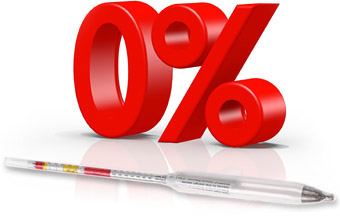
To determine the alcohol level of any wine you must take more than just one reading with the gravity hydrometer. You must take two readings and compare them -- one before fermentation begins and another one after. For example, a typical beginning reading on the gravity hydrometer's alcohol scale would be 13%. The typical ending reading might be 0%. If this were the case, the wine would have 13% alcohol.

It is the beginning reading minus the ending reading. Or, another way to look at it: it is the distance that the fermentation travels across the alcohol scale, not its current reading.

Another point is that the scale is actually not call an alcohol scale. It is called a Potential Alcohol scale. At any given time this scale can tell you how much alcohol can be made with the sugars that are currently available in the wine must. It cannot tell you how much alcohol is in the wine. In your case, the Potential Alcohol scale is reading close to zero because there are little to no sugars left to make more alcohol. They have all been consumed already by the fermentation.

If you would liked to read more about this the article, Hydrometer Scales And What They Mean, that is listed on our website will fill you in on the details of the gravity hydrometer and all it's different scales it might have. 

Happy Wine Making,
Customer Service

Concentrate vs Grapes

Monday, January 16, 2012 by Ed Kraus

Quality Wine Making GrapesHello Kraus,

I have been making wine from top end ($200+) wine kits and really getting into it.

I was wondering if I should continue with wine kits or jump into creating wine from fresh grapes. I guess my questions is: What will produce a better red wine, a high end wine kit or quality fresh grapes?

Best Regards,
Dominick S.
-----
Hello Dominick,

This is really a great question, and one that I'm sure is on the minds of many individuals who use these homemade wine kits, so I'll cut right to the chase.

As surprising as it may seem, your better wines are much more likely to come from our high-end, homemade wine kits. There are two very compelling reasons for me saying this: 

  1. You cannot make a wine that is better than the grapes used to produce it. This is an adage that is well known and respected throughout the wine making industry. While adhering to sound wine making practices is extremely important, the quality of your wine is limited by the quality of your grape. Being a good wine maker does not trump having good grapes. 

    And that is exactly what you are paying for when you purchase our high-end homemade wine kits. You are paying for select grapes. These are grapes from prized wine making regions around the world. So unless you are writing to me from either Napa or Sanoma County, the quality of the grapes you can find will have to be taken into consideration. Most home wine makers do not have access to the caliber of grapes these kits provide.

  2. The juices in these kits have been bench-tested several times. What I mean by this is the producers of these homemade wine kits have already made the wine from them and have made the optimal adjustments before they are brought to the home wine maker market. All the controllable variables such as acidity, brix level, and others have all been taken care of for you so that you can have consistently good results.
All of the above does not mean that you shouldn't make wine from fresh grapes. There's always something charming about making something from scratch, and the case of making your own wine, is no different. It's fun... It's gratifying... It's rewarding... It gives you a sence of accomplishment, just like any good hobby should do.

Making wine from fresh grapes is also a great learning experience. You get to aquainte yourself, first-hand, to what a winery has to accomplish to get the grapes into a wine bottle. So if you are in the hobby to learn more about wine, then by all means go ahead. Make some wine from fresh grapes. But if you're in it to make the best wine possible, stick to our high-end homemade wine kits.

Best Wishes,
Customer Service

Is Two Packs Of Wine Yeast, One Too Many?

Monday, January 9, 2012 by Ed Kraus
Wine YeastCustomer Service:

One of my wine making kits seem to be slow in starting & after a few days, we added another yeast pkg. to the wine......which finally begin activity. With 2 wine yeast pkg. in the wine, will it effect the taste or final product.  Is there anything else we should add in this case to get the wine brewing?

Thank you
Chris D.
-----
Hello Chris,

Whether you use one, two or even three packets of wine yeast, it will not have a direct impact on the flavor of the wine. When a single packet starts to ferment, it first goes through what is know as an aerobic stage. This is when the wine yeast begin to multiply themselves into larger numbers.

When making wine from one of these wine making kits, this aerobic phase will typically increase the numbers from the single packet of yeast you added into a colony that is about 150 to 200 times that--up to a certain range or ceiling. That is what makings all that sediment you see in the bottom of your carboys.

If two packets are added, the wine yeast will not make double the volume, but it will make a little more than one packet would, but only slightly more. In either case the yeast will all drop out when they are finished with the fermentation. If the fermentation go correctly, all the yeast will be remove, regardless.

But having said this, you should have only needed one packet of yeast in the first place. The fact that a second packet caused the fermentation to take off would be an indication of one of three things:
  1. First packet of yeast was old. Not very likely, but it does happen.
  2. The water used in making the wine was too cold when it came out of the tap, but eventually warmed up enough to allow a fermentation. This is usually around 24 to 36 hours after being drawn--about the same time you added the second pack of wine yeast. Something we see sometimes in the colder months.
  3. You rehydrated the first pack of yeast in warm water, just as the packet directs, but you did not actually control the temperature of the warm water by taking a temperature reading and/or you did not leave the wine yeast in the warm water for the exact amount of time called for in the directions. In either case, the wine yeast could have been destroyed during this process by water that was just a little too warm or by wine yeast that was left in the warm water longer than instructed.
Number 3 is by far the most common reason we see. Regardless of the reason, its always okay to add a second packet of wine yeast. Just realize that it is not usually a solution to the problem. You also have to be aware of the temperature of the fermentation along with other factors.

One thing you could do when a fermentation is not taking off as planned is to run through the, Top 10 Reason For Fermentation Failure. These 10 reasons cover over 95% of the stuck fermentations we see.

Happy Wine Making,
Customer Service

My Fermentation Has Too Much Sugar. What Should I Do?

Monday, January 2, 2012 by Ed Kraus
Stuck FermentationOh OH, Mr.” wineproblemsolver”,

I have a stuck ferment in my wild grape wine at 1.012. I tried adding a fresh yeast culture and yeast nutrient and it has not responded. My guess is I had the sugar to high. I was reading about 1.090 at the start but realized there was undissolved sugar in the bottom of the fermenter. I am not sure how much. The fermentation went well to SG 1.015 and then stalled. It went slowly down to 1.012 after the addition of the new culture  then stuck tight. I might have a high alcohol problem? What do you think. Can I get it going again with a high tolerant alcohol yeast? What do you recommend.

Dr P
-----
Hello Dr. P,
 
Your suspicions of too much sugar may very well founded, but quite often it is a combination of issues that are working in concert to create a stuck fermentation. I would also look closely at the temperature of the wine. If it is below 70 F. I would try to get it up to at least 74 F. to make the wine yeast "happier". This small change in temperature may not seem like much, but it can make a big difference in the way the your homemade grape wine ferments.
 
If the temperature seems to be okay you might also want to look at the "Top 10 Reasons For Fermentation Failure" listed on our website. This article lists eight other possible reasons that may be at work here. One of them may help to get your wine brewing again.
 
If too much sugar still appears to be the only problem, you can try adding 3 or 4 packs of Red Star Pasture Champagne Yeast to the batch. This won't be two much wine yeast since the pack you added before multiplied itself to about 150 times the original amount. Hopefully, this new wine yeast will be able to multiply as well. Pasture Champagne yeast has a better tolerance to high alcohol and cooler temperature and may be enough to get your homemade grape wine going again.
 
If you want, you can put the wine yeast in a small amount of the wine first... say a pint. Add an 1/8 teaspoon of Yeast Nutrient and a tablespoon of sugar to the mix and see if you can get that to show some activity. Keep the jar covered with a paper towel or similar.

Once any activity peaks, add it to the rest of the wine. This normally takes 1-1/2 to 2 days to happen. If your not sure its peaked or not, pitch it into the wine anyway.
 
Happy Wine Making
Customer Service at E. C. Kraus

Storing Homemade Wine At Refrigerator Temperatures

Monday, December 26, 2011 by Ed Kraus
Store Homemade Wine At Refrigerator TemperaturesHello EC Kraus,

We purchased a refrigerator to store our wine in, but the temp. is 47 degrees.  We cannot get the refrigerator to go any higher.............Is that too cold to store wine?

Darlene
----------
Hello Darlene,

Thank you for this great question.

You are correct in assuming that temperature does make a difference when storing wine. But having said this, most home winemakers store their wine at room temperature or basement temperature and do perfectly fine.

Simply stated, temperature affects a wine by changing how fast or slow it ages. The cooler the temperature, the slower it will age. The warmer the temperature, the faster it will age.

You would think that you would want your wine to age faster so that it could taste better sooner, but this is really not the case. While wine does get better with age, there is also a life-cycle that needs to be consider.

A wine will typically improve for a period, then somewhat plateau in its improvement for a time. After that, it will very, very slowly begin to degrade in quality. A wine may reach its best in 6 months. Others might take 6 years. A lot of this has to do with the wine itself. Its body, flavor and structure all play a role. But temperature plays a role as well. Then as time progresses the wine will slowly begin to become flabby, lifeless, then finally, unacceptable to drink. For some wines this might be 5 years, for others 50.

Just how high a wine will plateau in quality is up to the wine, but how fast and long it stays at this plateau is up to the keeper of the wine and the temperature they decide at which to store the wine.

All of the above applies equally to commercially made and homemade wines. Most wine experts agree that 55 F. is a good temperature to stay with when storing wine for the long hall. I personally do not see a problem with 47 F., particularly if you think some of your wine might last 7-8 years or more. If I were in your situation, I would not have a problem with using the refrigerator at 47 F.

Happy Wine Making
Customer Service at E. C. Kraus

Keeping Fruit Wines In Fruity Balance

Monday, December 19, 2011 by Ed Kraus

Balancing Flavor And AlcoholHi: 

Thank you for your newsletter each month. It is very informative and helpful to me in my winemaking.
 
I have a question, "How do I keep the  fruit flavor in my wine? I end up with about 13 percent alcohol content but am losing the fruit flavor. Could you help?
 
Thanks
Ed H.
-----
Hello Ed,

Thank you for all the kind words. We try very hard to bring useful, relevant information to the home winemaker.

What your question really involves is the basic balance of the wine. There are three primary elements in a wine's basic balance profile: fruit flavor, alcohol and sweetness.

Obviously, the amount a fruit that you use in a wine recipe will affect the wine's fruitiness. The more fruit in the wine recipe, the fruitier the wine will be. But there are limits to how far you can take this.

Using too much fruit can create a wine that is sharp tasting. This is caused by excess fruit acid coming from the fruit. It can also create a wine that takes an incredible amount of time to completely age. So there is only so much fruitiness to be had in a given recipe.

While adding more fruit increases the fruitiness, alcohol decreases it. This happens simply because the alcohol is numbing the tongue making it less sensitive to fruit flavors. This is why you will typically find among wine recipes in various wine making books and on the web, that the higher the alcohol level, the more fruit the wine recipe will call for.

Sweetness also plays a role in balance. During a fermentation all the sugars are turned into alcohol, even the sugars that come from the fruit itself. Removing the sugars will lower the fruity impression of the wine dramatically.

The good news is this can easily be corrected at bottling time. By adding a little sugar syrup solution you can bring back the fruitiness. Just a very slight amount of sweetness can bring out a lot of fruitiness in the wine. You don't necessarily need to make the wine sweet. You just need to take the dry edge off the wine.

Add the sugar to taste and then also add Potassium Sorbate. This is a wine stabilizer that will keep the wine from fermenting the newly added sugars. This is what I recommend doing with your current batch. As for future batches, you will want to lower you target alcohol level a little... maybe 11% instead of 13%. This will make a noticeable difference. The wine will seem more lively and less watery.

By working with these three basic elements of a wine: fruit flavor, alcohol, and sweetness, you can control how much fruitiness your wine will or won't have. It is up to you to create a wine the way you like it. It's all part of learning how to make your own wine.

Happy Wine Making
Customer Service


I Need A Beginner Wine Making Kit For Dummies!

Friday, December 9, 2011 by Ed Kraus
Beginner Wine Making KitHello Kraus:

Is there a wine making kit for dummies that is both easy and cheaper than buying at the store (dry wine)?

Thanks
----------
Hello Anthony,
 
Yes, we have just that!

Our SunCal Wine Making Kit is a beginner wine making kit that was designed to allow you to make wine less expensively than what you can buy it at the store. It includes all the wine making materials and ingredients you will need to make your first 5 gallon batch of homemade wine. After that, you can continue to make wine for about $3.00 dollars a bottle. 

You can choose from 16 different wine grape concentrates to make wines such as Cabernet Sauvignon or Chardonnay. And you can make them as sweet as you like or as dry as you like. That's one of the great bonuses of making your own wine. Not only are you saving money, but you get to make wine the way you like it.

The SunCal Wine Making Kit comes with fool-proof, homemade wine instructions that take you by the hand and guide you through the whole wine making process. And what's really great is once you've made your first batch, there's no more learning. All the other SunCal wine concentrates you can choose are made exactly the same way.

The beginner Wine Making Kit is a simple, painless way to learn how to make your own wine. You can also give us a call any time you like if you have a question. We've been helping beginning home winemakers just like yourself for over 45 years now. We know how to guide you through the wine making process and get your first batch of wine brewing.
 
Best Wishes,
Customer Service at E. C. Kraus

What Causes A Wine To Taste Too Sour?

Monday, December 5, 2011 by Ed Kraus
wine is too tart sourGood day!

May I know what causes a fresh fruit wine to taste so sour? I've tested a homemade fresh fruit wine that is so sour, and what is the remedy to remove the taste?

Thanks very much!
Shirley S.
-----
Hello Shirley,
 
In almost all cases, the reason for a wine tasting too sour is too much acid. All fruits have various acids in them that contribute to a sharp/sour taste. If the fruit is too acidic, or too much fruit is used in the wine recipes, you can end up with a wine like you are describing.

This type of defect is also enhanced by the fact that during a fermentation almost all of the the sugars from the fruit are fermented into alcohol. This doesn't make the wine more acidic, but it does allow the sour flavor to stand out much more.
 
Acidity can be a problematic area if you are just leaning how to make your own wine. With future batches the acidity level needs to be watched both before and after the fermentation. If the wine is flat tasting this means there is not enough acid. You may need to add more acid to bring the wine back into balance. This is normally done with the addition of Acid Blend.

If the wine is too acidic, there are a few ways you can go about reducing it, including dilution. A very good article on the subject is Getting A Handle On Wine Acidity. It has some wine making tips for reducing the acidity of a finished wine as well as other information.

Following trusted wine recipes when making wine will normally keep you out of trouble. A further step you can take is to get an Acid Testing Kit. It will come with directions that will tell you what reading to shoot for and what to do to get it there, even before the fermentation starts.
 
 
Best Wishes,
Customer Service

Wine Recipe Conudrum: 5 Gallons Of Water, Or Water To 5 Gallons?

Monday, November 28, 2011 by Ed Kraus
Wine RecipesHi:

When looking at your chart for wine recipes, when you say it makes five gallons, is that five gallons of water plus the fruit and sugar or is it five gallons total with the water, fruit, sugar, etc included? I'm asking this because I want to know if I go over the five gallons, do I need to add more ingredients (yeast nutrient, etc.) according to how much I went over the five gallons?

Bernie C.
-----
Hello Bernie,

Thanks for the great question and for giving us a chance to clear some of the confusion surrounding our wine recipes. I would like to add that this issue pretty much comes up with any of the wine recipes you might run across, whether it be from a friend, or in wine making books, or from our website.

Here is the short answer. You should end up with 5 gallons of wine while using no more than what is being called for in the wine recipes. The only variable is the water.

A simple way to approach this is to add water to the batch until the total volume reaches 5 gallons. After the first racking, when all the sediment and pulp is removed, you will then add additional water to bring the batch back up to 5 gallons.

This is known as topping up. On average you might have to add a half gallon of water back to the batch, but this amount can vary wildly depending on the type of wine you are making.

In certain cases where you know you are going to be removing a lot of pulp, you may want to go ahead and start the batch size a little more than 5 gallons. For example, this could be the case with any of the Muscadine wine recipes you might run across.

All in all, how much water you start out with is not too critical. Just be in the ballpark. The important thing is to end up with 5 gallons wine when you are finished. And yes, it is okay to add more water during the fermentation.

Best Wishes,
Customer Service

Bubbles! We Don't Need No Stinking Bubbles!

Monday, November 21, 2011 by Ed Kraus

Bubbles In Homemade WineHi:

I bottled my wine for the first time this year - i bottled 45 - i have went thru several bottles and given a few away.  But recently the last couple of bottles that i have opened have tasted fine - but i notice that the wine glass will have bubbles clinging to the side of the glass after sitting for a while. Do you know why this is? 

Thanks,
Jon
----------
Hello Jon,

What I'm understanding is that the first few bottles of this wine were perfectly fine. Then as time went on you began to notice bubbles in the wine after pouring it into a glass.

This could really only mean one thing... your wine has started fermenting in the bottles. It is important to understand that even the slightest amount of fermentation can cause a lot of CO2 gas. The bubbles you are seeing is this gas.

What can cause a refermentation to happen is one of two things:

  1. Either the wine was bottled while there was both some sugar and residual wine yeast still in the wine.
  2. You added sugar to the wine to sweeten it and did not add a wine stabilizer a.k.a. Potassium Sorbate before bottling to keep the wine from supporting a renewed fermentation.

The solution to #1 above is to give the wine plenty of time to finish its fermentation and to clear out the wine yeast before bottling. Also verify with a gravity hydrometer that the wine is, in fact, finished and did not stop prematurely for some unknown reason. If you didn't, you should also add Sodium Metabisulfite at bottling to help deter this type of activity and keep the wine fresh tasting.

The solution to #2 is to always use Potassium Sorbate in addition to the Sodium Metabisulfite when adding sugar for sweetening. Potassium Sorbate keeps the wine yeast from reproducing.

And as before, you always want to give plenty of time for the wine yeast to clear out of the wine. Even with Potassium Sorbate the wine yeast can give you trouble if there are too many cells floating about in the wine.

I hope this information helps you out. We also have an article on our website that my be of some help, Making Sweet Wines.

Happy Winemaking
Customer Service

Sediment In My Wine Bottles.

Monday, November 14, 2011 by Ed Kraus
Crystal Clear WineHi

After I bottle my wines, I'm getting a small amount of sediment in the wine bottles after about a month. Talking to several people about this, they say I'll probably always have this unless I start filtering my wine. I don't make a lot of wine so it is hard to justify buying a pressure wine filtering system.

My question is how do coffee filters compare with the wine filters you sell with your pressure filtering system for effectiveness on removing sediment? Or is there something else I could try? I use a clearing agent and my wine usually sets about 5 months before I bottle it.

Thanks in advance for any information you can give me.
 
Bernie C.
----------
Hello Bernie,

To answer your question, coffee filters do not compare to a pressurized wine filter. The typical coffee filter will filter down to somewhere around 20 microns. That's about half the size of a human hair. A typical wine filter can filter down to a 1/2 micron. That is 40 times finer than the coffee filter.

How fine a wine filter can filter holds true regardless if you're using our less elaborate Pressurized Wine Filter System or our more professional SuperJet wine filter system. The difference between the two is speed, not how well the are able to filter a wine.

A second area of concern with using a coffee filter is oxidation. If a wine is exposed to excessive air this can cause a browning and other oxidative effect on the wine. This is because when using a coffee filter to filter wine there is a lot of air exposure. This is do to the slow nature of filtering wine without pressure and the fact that the wine has to drip and splatter.

Now lets talk about the sediment in your wine and the most likely causes and solutions for this type of problem.

Your friends are completely wrong when suggesting that you will need to tolerate this sediment if you don't filter. Filtering is never a necessity to a visually clear wine. In fact, wine filters are not designed to clear a cloudy looking wine, they are design to make a clear looking wine become more brilliant and polished in appearance. Attempting to filter a visibly cloudy wine will only clog the pads in a matter of a gallon or two of wine.

Sediment in the wine bottle is usually caused by one of two things: Either it is wine yeast is still settling out of the wine, and it just hasn't had enough time to do so. Or, it could be a precipitation of some sort that is occurring after the wine has been bottled.

Precipitation means particle are developing out of thin air, so to speak... liquid in this case. Precipitation is most common when making a homemade grape wine.  

In the first case the solution is simple: either speed up the dropping out of sediment with fining agents such as bentonite or Sparkolloid, or wait longer before you bottle. Wine yeast is as fine as flour so gravity can take some time to drag it to the bottom.

You stated that you let your wines set for around 5 months before bottling, so this is not likely to be the cause in your particular issue.

In the second case, things can be a little more tricky. When we say a precipitation of some sort is occurring in your wine, what we are really saying is your wine is unstable. Not unstable in the sense that it is still fermenting, but in the sense that change can potentially still occur in the wine.

The two most to common forms of precipitation in a wine comes from tannin proteins and excess acid. A temperature change of the wine can cause either to occur. If the wine becomes warmer than before tannin may drop out. If the wine becomes cooler than before acid may drop out. This is known as temperature stability, or the lack of, as the case may be.

Tannin will show up as a dusty, caked deposit. Acid will show up as salty or sugary looking crystals. There are tests and treatments you can do to a wine before bottling to make sure these deposits are kept in check.

To read more about stabilizing your wine you may want to take a look at the the article, Maintaining Temperature Stability In Your Wine, listed on our website. This article goes over how to do simple tests to determine if your wine has a temperature stability problem, and if so, how to go about resolving the issue.

I would like to point out at this time that if you are making a wine from homemade wine kits like our California Connoisseur, KenRidge Classic or any other brand, temperature stability is not your problem. All of these type of homemade wine kits, regardless of what brand you get or where you get it, have been stabilized for you ahead of time. So if you are getting deposits in the wine bottle with these wine kits you should suspect wine yeast deposits as the issue.

Happy Wine Making,
Customer Service

Temperature And Fermentation

Tuesday, November 8, 2011 by Ed Kraus

Wine Making Too ColdHi,

I am a newbie to wine making. I believe the primary fermentation temp should be 65-75? How about the secondary fermentation and subsequent processes? I am wanting to make my wine in my basement but it might be too cool.

Thanks.
Todd
----------
Good Afternoon Todd,

This is a great question. The answer to it is quite often what trips up many beginning home winemakers.

The effect that temperature has on a fermentation is enormous and greatly underestimated by many. This is particularly true for those new to wine making. As an example to the enormity of its effect, consider the 65 degrees F. you mentioned above. This might allow a fermentation that is barely noticeable to occur, whereas the 75 degrees F. you mentioned might end up producing a fermentation that results in a spewing volcano of foam. That's how critical temperature is to fermentation.

The type of wine yeast you use, along with what you are fermenting and a whole host of other variables also factor into how dramatic this comparison plays out, but without a doubt its always dramatic enough to make your question an important one.

Whether or not your wine must is in a primary fermenter or secondary fermenter is not what is critical to the temperature you maintain. What is critical is the readings you are getting with your gravity hydrometer.

You will eventually want to keep your wine in a little cooler temperatures than what you previously mentioned, but you also want the fermentation to be complete before moving to these cooler temperatures. You determine if a fermentation is finished by taking a gravity hydrometer reading, not by whether or not it is in a primary or secondary fermenter.

You can read more about checking the fermentation with a hydrometer in the article, Getting To Know Your Hydrometer, listed on our website.

Sometimes the fermentation finishes while it is still in the primary fermenter. Sometimes the fermentation carries on for a great deal of time while it is in the secondary fermenter. The reason for this inconsistency is because of all the variables mentioned before: yeast strain, type of wine, etc.

Even though you suggested temperatures between 65 F. and 75 F. for fermentation, we recommend between 70 F. and 75 F. Once you get below 70 F. you can run into issues of the fermentation dragging on and on.

Once there fermentation has completed, and this has been verified with a gravity hydrometer, you can then maintain a lower temperature. An optimal temperature for storage would be 55 F., but it is not extremely critical. Just do the best you can to keep it out of warm temperatures once the fermentation has completed.

I hope this information helps you out.

Best Wishes,
Customer Service

Don't Sweeten Your Wine Too Early!

Monday, November 7, 2011 by Ed Kraus

When To Sweeten WineHi,

Can I sweeten my wine at the same time of second racking.

Thank,
Yacoub
----------

Hello Yacoub,

Before you sweeten the wine, it is important that you wait until the fermentation has completed, and the wine has had plenty of time to clear out all the wine yeast. Quite often, this does not happen by the time you do the second racking.

In actuality, the best time to sweeten a wine is right before bottling. This gives plenty of time for everything to settle out. There is no upside to sweetening the wine before this, only a potential for problems.

The reason clearing the wine is so important is because the wine must become stable before sweetening, otherwise all the new sugars will end up as fodder for a renewed fermentation.

Cloudiness in a wine usually indicates it still has excessive wine yeast. It is very hard to stabilize a wine that has residual wine yeast still floating throughout the wine.

Potassium sorbate is what has to be used to stabilize a wine when sugar is being added. While either sodium metabisulfite or Campden tablets should be used as well, each is not sufficient enough on its own to stabilize the wine.

Potassium sorbate stabilizes a wine in an entirely different way than these two sulfites. It does so by putting a restrictive coating on the outside surface of each of the few remaining yeast cells. This does not necessarily kill the yeast. They will die on their own in hours or days. But it makes them unable to reproduce themselves. The ability to reproduce is the real threat that can manifests itself as full-blown fermentation.

If the wine is still even slightly visually cloudy, there may not be enough potassium sorbate to go around to do a complete stabilization. This is the downside to sweetening/stabilizing the wine sooner the necessary. 

With all this said, here is another one of my wine making tips: You want to give the wine as much time as possible to clear before you sweeten it. This will help to guarantee that the wine will be completely stable, with no unwanted fermentation.

Best Wishes,
Customer Service at E. C. Kraus

My Wine Recipes Don't Call For Any Water!

Monday, October 31, 2011 by Ed Kraus

Water In Wine RecipesHi,

I have started with 32 lbs. of concord grapes, sorted and crushed.  The recipe (doubled) on page 19 of your book named "Winemaker's Recipe Handbook", recipe #54, the Concord "Fresh -Dessert" one does not call for any water, where the other Concord choices of wine recipes do call for water. 

As I have never made wine before that did not call for some water, what can I expect this wine to be like, dryish, or not, I am at a loss as to what to expect. Should I add some water?

Thanks
Kelly
----------

Hello Kelly,

Just to let you know, all the commercially made grape wines you see of the store shelf: Cabernet Sauvignon, Merlot, Chardonnay, Concord and hundreds of others, are made from 100% grape juice-- no water added. The straight juice from these grapes are near optimal for making wine in terms of acidity, flavor intensity and sugar level. That's why most wines are made from grapes.

But fruit wines such as raspberry, blackberry, plum, etc., all need to have their juice cut with water in their wine recipes. This is mainly because these juices have too much acid in them. This makes their flavor too sharp/sour for drinking. You can see some of these wine recipes on our website.

Using straight Concord grape juice when making a homemade grape wine will produce a full-bodied wine -- rich in color with plenty of flavor. The other wine recipe with the water added, will make more of a blush wine, not as bold, more crisps in character.

It is important to note that one of theses wine recipes is not necessarily better than the other, they simply produce different styles of wine. Personal preference will dictate as to which one you think is best.

As to your question about the sweetness, either of these wine recipes can be made sweet or dry. How much water is, or isn't, in these wine recipes does not factor into the sweetness. All the sugar in the wine must will be fermented into alcohol and the wine will by dry, regardless if water is used or not.

If you want your wine sweet it is just a matter of adding sugar at bottling time. It is also important to realize that if sugar is added you will also need to add potassium sorbate to stabilize the wine, otherwise a re-fermentation could occur.

Best Wishes,
Customer Service at E. C. Kraus

Campden Tablets: What They Can And Can't Do.

Monday, October 24, 2011 by Ed Kraus

Campden TabletsOne of the most commonly used ingredients in home wine making are Campden Tablets. You will find them in almost any of the wine making recipes you will use; talked about in almost any of the wine making books you will read; and called into action by just about any of the homemade wine instructions you will follow.

What Do Campden Tablets Do?
The original reason these tablets were used in wine making was to keep the wine from spoiling after it had been bottled. By adding these tablets at bottling time, you could virtually eliminate any chance of your wine falling victim to mold, bacteria and other foreign enemies.

Since their introduction into wine making, they have also become routinely used for sterilizing the juice prior to fermentation. By adding Campden Tablets a day before adding your wine yeast, you can start your fermentation with a clean slate, so to speak. All the unwanted micro organisms will be gone.

Some home winemakers also use Campden Tablets with water to create a sanitizing solution. This solution will safely sanitize fermenters, air-lock, stirring spoons, hoses and all the other pieces of equipment that may come into contact with the wine must.

What Campden Tablets Don't Do?
Many beginning winemakers believe that Campden Tablets are a magic pill of sorts. One that can instantaneously stop a wine fermentation dead in its tracks. While it is true that Campden Tablets can bring a fermentation to its knees for a period of time, it is also true that these fermentations will gather themselves back up and eventually overcome the effects of the tablets. The result is a continued fermentation --  sometimes after the wine has been bottled.

Truth is, Campden Tablets are not designed to stop a fermentation and never have been. Using them for that purpose can get you into all kinds of trouble. There is really no ingredient that can be safely used by itself to assuredly stop a fermentation.

What Are Campden Tablets?
Simply put, a Campden Tablet is sulfite. When you add a tablet to the wine you are adding sulfites to the wine. Most Campden Tablets consist of potassium metabisulfite, but some are made with sodium metabisulfite.

How Are Campden Tablets Used?
Their use is fairly straight-forward. You add one tablet to each gallon of wine must 24 hour prior to adding the wine yeast -- before the fermentation. Then you add one table per gallon just before bottling.

The Campden Tablets must first be crushed and dissolved in a small amount of the wine or water. This mix is then stirred thoroughly into the rest of the batch.

You can use the Campden Tablets to create a sanitizing solution by crushing up 4 tablets into a quart of water. This can be used as a sanitizing rinse, or you can pour it into a fermentation container and allow the fumes to sanitize the entire insides.

As An Alternative To The Campden Tablet...
You can use Potassium Metabisulfite or Sodium Metabisulfite in the form of a granulated powder. The advantages are: you don't have to crush it up; and it is cheaper. The disadvantage is you have to measure out the dosage, which is 1/16 teaspoon per tablet.

Keeping A Fermentation Warm

Tuesday, October 18, 2011 by Ed Kraus

Heat MatHello

Are there electric heater covers available for carboys or plastic fermenters to keep the working wine at a constant temperature?  I have no ideal place in my location where a constant temp is available.
 
Thank You
Carl M.
----------
Hello Carl,

The difficult part about keeping a fermentation artificially warm is that you need a very mild heat source. It is easy to over-heat a fermentation and ruining the wine must with too much heat.

An example of this would be an electric blanket. Every electric blanket I've seen would make a fermentation way, way too hot -- even on their lowest settings. In fact, we've had customers attempt this with great failure.

Besides keeping the room's ambient temperature between 70F and 75F, there are two simple methods I've seen work fairly well for keeping a wine fermentation warm.

The first method is to use a 100 watt incandescent light bulb. If you can still find one. Put it in an old lamp and put it off to the side of the fermenter about 12 inches. This will raise the temperature of 5 gallons about 8 to 10 degrees. Because light can promote oxidation in a wine, this works best with a opaque plastic fermenter, but I've used this method with clear, wine carboys, too. I just wrapped a heavy towel around it to guard it from the light.

The second method I've seen work is using a seedling heating mat. This is a little mat you can buy at a gardening supply retailer. They are used to keep nursery plants warm while sprouting in the early months. They are a very mild source of heat and are about the right size for a wine carboy or a typical plastic fermenter.

One of your best friends in these types of situations is a thermometer. Keeping a very close eye on the temperature when the temperature is so volatile is crucial to a successful fermentation. That is why I would urge you to buy a Liquid Crystal Thermometer for each wine carboy of plastic fermenter you have.

I hope this information has helped you out a bit and given you an idea of what needs to happen. I'm sure there are other ways to keep a fermentation cozy, some that haven't even be thought of yet, but at least now you have some clue as to what is needed.

Best Wishes,
Customer Service

Double The Sugar To Sweeten The Wine... Wrong!

Monday, October 10, 2011 by Ed Kraus
Wine StabilizerGood Morning:

Most of my "fresh fruit" wines are dry. I was talking with a gentleman who also makes his own wines. He told me to double up on the sugar to sweeten my batches. Right now I have a batch of grape wine (brewing since mid-August). It needs to be racked again. If I add sugar to this batch now, will it start fermentation all over? 

Thanks,
Marlene
----------

Hello Marlene,

The short answer to your question is, "yes." Continuing to add more sugar to your wine must while it is still fermenting will contribute to more fermentation and alcohol content, not to the wine's sweetness. When first learning how to make your own wine this can be a great area of confusion for many.

If you keep adding more and more sugar you will eventually come to a point where the wine yeast can no longer ferment more alcohol, but where that point is is something that varies greatly from one batch to the next based on a whole host of conditions.

Factors such as temperature, available nutrients, the type of wine yeast, and many, many others all sum up to either contribute to or hinder the wine must's ability to ferment. Some factors such as available oxygen and temperature can even change over the coarse of time. This means that the fermentation can stop at some point and then start up again if sugars are still available... even after it has been bottle.

But there is another way to approach making a sweet wine beside adding a bunch of sugar and hoping for the best. One that is more predictable, more controlled and easy to accomplish. This is also the method that any of the wine making books you read will suggest.

The first step is to accept the fact that any sugar you add before fermentation is to contribute to the alcohol content of the wine and not its sweetness. You can follow your wine recipes suggested amount, or you can use a gravity hydrometer to tell you how much to add. Shoot for an alcohol range of 10% and 13% alcohol.

The second step is wait until the wine's ready to bottle before worrying about sweetness. Once the wine has cleared and is ready to bottle, you can then add sugar to taste. Once you get the wine's sweetness to where you like it, you will then need to add potassium sorbate. This is a wine stabilizer that will hinder the residual yeast' ability to recolonize and support a re-fermentation. Don't confuse it with Campden tablets or sodium metabisulfite. These work differently and can not completely eliminate a chance of re-fermentation.

By going about sweetening your wine in this way you are taking charge of the wine's sweetness and no longer are at the mercies of a wine must's ability to ferment or not ferment. If you'd like, you can also think about it as taking control or your wine's alcohol content -- particularly if you are using a gravity hydrometer to help you target an finished alcohol level.

I hope this information helps you out.

Happy Wine Making,
Customer Service

What's The Difference Between Crushing And Pressing Grapes?

Monday, October 3, 2011 by Ed Kraus

Grape Presses and Grape CrushersAny of the wine making books you read, will tell you that grapes need to be crushed and pressed. The same holds true for the directions that typically come with wine making recipes. But what does crushing and pressing actually mean?

Many beginning wine makers think they both to mean the same thing, that the terms are interchangeable, when in fact both mean something very different. To understand just how different you must first know a little bit about the wine making process.

When making wine from grapes it is important to realize that you are not only dealing with the juice from the grapes. You are also dealing with the grapes themselves: the pulp, the skin, and all the fiber that make up what is actually the grape. It is from these organic solids that the grape is able to provide body and color to the wine. Without them all you have is clear grape juice with very little qualities at all.

This is why when a winery makes a red wine, the skin and pulp are actually in the fermentation along with the grape's juice. Once the fermentation has almost completed, all the fibrous solids of the grapes are then removed.

But how do these grapes become a soupy mix that is fermentable? Then later, how is the skin and pulp removed? This is where crushing and pressing come into practice.

Crushing is what's done before the fermentation. It's what changes the plump grapes from something you pop into your mouth to something you can slop around in a fermenter.

Crushing the grapes is a very straight-forward task. It's simply a matter of bursting the skins so that all the inner solids can be exposed to the fermentation. Enough free-flow juice will release from the grapes to turn the crushed mix into something liquid we call a wine must.

You can crush the grapes by doing something as archaic as throwing the grapes into a bucket and pounding them with the butt end of a 2x4, or it can be as elaborate as processing them through a grape crusher that was designed specifically for the purpose. Both methods do equally well. It's more a matter of how many pounds of grapes you are dealing with and how much work you are willing to do.

Once the wine must has fermented for around 5 to 7 days it is then time to remove all the solids. This is when you'll see a winery pull out the grape presses and start pressing the wine must. The must is dumped into the pressing basket. Immediately, free-run juice will start flow from the grape press spout. What's remaining in the basket is then pressed to extract even more juice.

As a home winemaker you do not necessarily need to use a wine press. If you are dealing with a small batch, you can press it by hand as best as you can. A fermentation bag can come in handy for this process. Collect the pulp into the bag. Then hang it over a fermenter while you squeeze it. If you are dealing with a little larger amount, we have affordable grape presses as small as our Table-Top Press. It is ideal when making 10 or 15 gallons of wine.