
E.C. Kraus Home Wine and Beer Making Supplies

Order by Phone: 800-353-1906 Mon - Fri: 8 AM - 5:30 PM CST Sat: 9 AM - 1 PM CST
Browse Our Content:

A Simple Guide To Metabisulfites

Sodium Metabisulfite, Potassium Metabisulfite and Campden TabletsHello Kraus,

I have a quick question that I can't find the answer to. I'm hoping you can help me out. Which is better, campden tablets, sodium metabisulfite or potassium metabisulfite? I've looked in several places but don't understand why you need all 3 to make wine.

Shaun
-----
Hello Shaun,

Thanks for the great question. This is an issue that perplexes many wine making hobbyist. So I'm glad you brought it up.

The first thing to understand is that all three of these wine making ingredients do the same thing: Campden tablets, sodium metabisulfite and potassium metabisulfite, they all add sulfites to a solution. Whether it be wine or water the result is the same. Regardless of which of the three you use, the result is the same. Sulfites are being added to the liquid.

So what's the difference? Not much. The main difference between sodium metabisulfite and potassium metabisulfite is that one will leave residual amounts of sodium in the wine and the other some potassium.

Many home winemakers will lean towards using potassium metabisulfite instead of sodium metabisulfite in their wines as a means of avoiding more sodium intake in their diet. But in reality this is somewhat futile.

If the normal recommended dose of sodium metabisulfite is used—1/16 teaspoon per gallon—the residual sodium being added is equivalent to one slice of pickle per case of wine. Not enough to affect the flavor and certainly not enough to affect your diet.

Potassium metabisulfite is slightly stronger than sodium metabisulfite by volume—17% stronger—but this is not enough to be taken into account if you are only making 5 or 10 gallons of wine at a time. With either we recommend the same dosage.

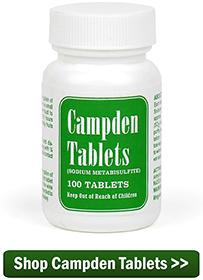
Now that we have cleared that up, what makes Campden tablets different from potassium and sodium metabisulfite? Again, not much. Campden tablets are nothing more that potassium metabisulfite in tablet form. The tablets are measured in a dose for one gallon of wine. You simply use one tablet per gallon.

So in the case of tablets, it's a matter of  convenience. If a home winemaker is only making a gallon or two of wine at a time, they may want to use Campden tablets instead of having to measure out a 1/16 teaspoon dose for each gallon, just to keep things simple.

As to your question as to which one is best to use, in reality it just doesn't matter. I say, 'pick one and go with it'. Many home wine makers will use sodium metabisulfite for sanitizing their equipment and wine bottles and then use the potassium metabisulfite to go directly into the wine for preservation. But in reality, if you don't want to buy both... not a big deal.

Happy Wine Making
Customer Service at E. C. Kraus

________________________________________________________

Read More About Wine Sulfites And Other Winemaking Topics,
FREE  EMAIL NEWSLETTER:

________________________________________________________

Comments (28)

Name: Dick
Time: Thursday, June 7, 2012

I have been using potassium metabisulfite for years as a preservative. However, in my last Cab Sav I beleive I put more that the 1/16 teaspoon per gallon. I am getting an aftertaste in my wire that I associate with the potassium metabisulfite.
Question, will time in the bottle help to remove this taste ?

Name: Fred
Time: Thursday, June 7, 2012

This helped me a lot I did not know the difference between the three. Now I do. Fred

Name: Herb Storie
Time: Thursday, June 7, 2012

We have been using the commerical fruit steamer for juce extraction.Do you have any comments relevant to this procedure. Thank you-- we enjoy your news letters very much. Herb

Name: Customer Service
Time: Thursday, June 7, 2012

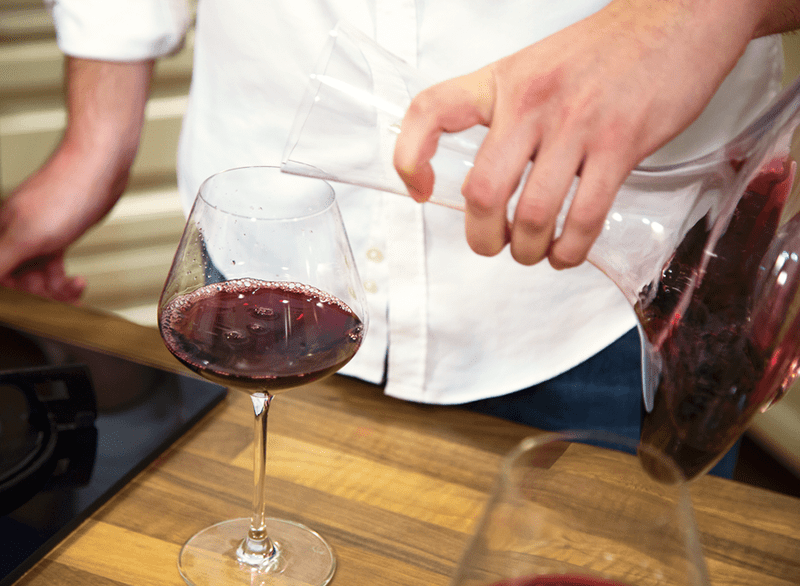
Dick, if the aftertaste if coming from excessive potassium metabisulfite, it will not diminish too much over time. Your best bet would be to let the wine breath in a carafe or similar for an hour or so before consuming to allow the sulfites to escape from the wine.

Name: Customer Service
Time: Thursday, June 7, 2012

Fred, glad the article was able to help you out.

Name: Customer Service
Time: Thursday, June 7, 2012

A steam juicer is great for extracting juice, particularly when you are dealing with your harder fruits. You can find more information about using a steam juicer on this blog by typing "steam juicer" (in quotes) in the search field above and to the left on this page.

Name: Joyce Davis
Time: Thursday, June 7, 2012

Great information. Keep sending this newsletter.

Name: james chest
Time: Friday, June 8, 2012

Hi, I made a 5 gal. batch of blackberry and apple wine. they are still in 5 gal. containers. they are crystal clear but were supposed to be bottled 6 mo. ago. Did I ruin them or can I bottle them?

Name: Holger Junge
Time: Friday, June 8, 2012

I have talked to people who are allergic or maybe sulfite intolerant...not sure. I'm wondering if there is a way around using sulfites or some alternative. I'd like to make wine that they could enjoy as well. Well, can ya' help me?

Name: Denfield McNab
Time: Friday, June 8, 2012

Is there anyother way to sanitize the wine than using any of the sulfites. My Mom used to make tropical fruit wine just by adding the sugar and the yeast and allowing it to ferment without any sulfites. I am afraid that my mom did not know anything by the name of sulfites. What say you
.

Name: Customer Service
Time: Friday, June 8, 2012

James, there is no reason that your wine is bad because it has not been bottle yet. The wine is aging in bulk, just as it would in the bottle. The only thing I ask is that you do not disturb the wine until you are actually ready to bottle. Just let it be.

Name: Customer Service
Time: Friday, June 8, 2012

Holger, you can make wine without sulfites. The problem is with the wine keeping. The clock is always ticking with this wines. So if you plan on making wines without sulfites, plan on drinking them quickly--a few months--and keep them in a cool place.

Name: Customer Service
Time: Friday, June 8, 2012

Denfield, you can sanitize the equipment with all kinds of materials, but there is not anything other than sulfites that works to sanitize the juice itself. See previous post as well.

Name: Carl Swart
Time: Friday, June 8, 2012

We "simmer" all our fruit for 15-20 minutes, this "kills "all bacteria. A person in a wine supply store told us this. and do not use anysulfits----we have been making wine for over 10 years and have not had a "failure",

Name: richard
Time: Friday, June 8, 2012

Great website, so much info how could you not make wine right. Thank you for all the great info.

Name: Shishir
Time: Saturday, June 9, 2012

I am slightly confused with gallon and tea spoonful measures. Can you explain it in terms of grams of metabisulphite and liters of fruit juice?

Name: Customer Service
Time: Saturday, June 9, 2012

Shishir, the amount you use is very small. I've converted teaspoons and gallons to grams and liters for you. It converts to .08524 grams per liter, or 85.24 milligrams per liter.

Name: Walter Eidbo
Time: Sunday, June 10, 2012

The questions and the answers are very interesting and helpful.My wine seems to always come out cloudy at first. It finally clears ofter setting for some time.My friend who taught me how to make wine , has wine that always comes out almost cristal clear. What am I doing wrong ?

Name: Customer Service
Time: Monday, June 11, 2012

Walter, most wine's will clear up nicely on their own when given enough time. Some more so than others depending on what kind of wine it is. If you are not satisfied with the clarity of your wine I would suggest taking a look at the clarifiers listed on our website. If you wine already looks clear but not clear enough, I would in particular recommend using the Kitosol 40.

Name: Richard
Time: Monday, June 11, 2012

Been making wine since '77 and do not use any of the sulfites. Have not had a problem with spoilage, even after 8 years of ageing.

Name: garry vann
Time: Tuesday, June 12, 2012

opened wine after two days to add yeast & noticed some mold in one of the pulp bags , is this a problem. I used campden tablets to start. thanks

Name: Customer Servivce
Time: Tuesday, June 12, 2012

Garry, yes this is a problem. Your best course of action would be to remove the visual mold. This add another dose of sulfites. You will need to add another pack of wine yeast, but wait 24 hours before you do so.

Name: Kevin
Time: Saturday, June 30, 2012

In my first winemaking effort I bought a kit and followed the directions very carefully. The wine is very good except when you inhale the vapors it seems to go through your sinuses and nasal passages very quickly. I've been told it may have too much metabisulfites. Is this harmful and how can I neutralize it?

Name: Customer Service
Time: Monday, July 2, 2012

Kevin, it is more likely to be CO2 gas from the fermentation that is still trapped in your wine. Usually in the directions there will be a step to degas the wine. This is done by agitating it. I would suggest stirring your wine vigorously but without splashing, so as to not introduce oxygen into the wine. You should see bubbles rise out of the wine. Do so until the vapors are gone.

Name: Paulette Geyer
Time: Friday, December 14, 2012

This is the first year we used wine conditioner we used a 1/2 bottel in each 5 gal carboid and then added simple syrup to sweeten more. We bottled and then in about a week the corks started to pop. Is there anything we can do to stop this cork poping?

Name: Customer Service
Time: Friday, December 14, 2012

Paul, the only choices you have is store the wine in a refrigerator or put the wine back into a fermenter and allow the fermentation activity to complete then rebottle.

Name: shishir
Time: Sunday, March 24, 2013

I have read that Sod/ Pot mtabisulphite solution can be stored and reused for sanitizing the carboys and bottles etc. How long can the solution be stored and ow often can it be used?

Name: Customer Service
Time: Monday, March 25, 2013

Shishir, you can keep this solution for very long periods of time. It is very stable. The only exception to this is if you add an acid to the water along with the sulfite. Then it will not store more than a day or so.

Leave a comment

Captcha